
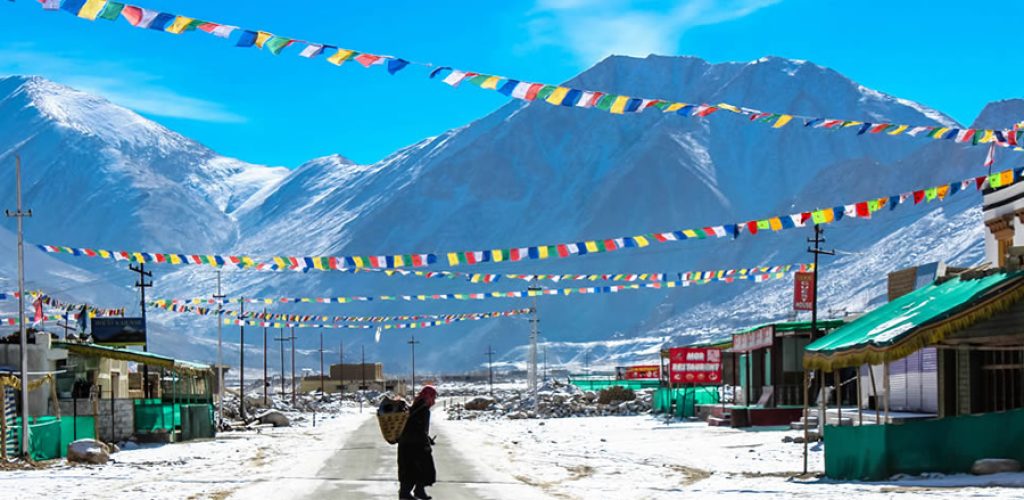
Perched up on the Himalayas, where the Indian subcontinent meets Central Asia, lies Ladakh – a land of stark beauty, ancient Buddhist monasteries and resilient communities. Often depicted as a tranquil Shangri-La, this high-altitude cold desert is, in reality, a complex crucible of conflict. The clashes simmering here are not isolated phenomena but deeply interconnected struggles, fuelled by a legacy of uncertain territorial demarcation, the strategic imperatives of post-colonial state-building and the challenges of navigating cultural preservation in a rapidly changing world. Understanding Ladakh’s layered conflicts offers a lens through which to examine the wider dilemmas facing remote, strategically vital regions globally.
Geopolitical and Border Conflicts: The Legacy of Undefined Boundaries
The most prominent conflicts in Ladakh are those related to international borders. The region shares disputed boundaries with both Pakistan and China, leading to perennial military stand-offs and occasional escalations. These disputes are not merely contemporary frictions but are rooted in the ambiguities and historical circumstances surrounding their original demarcations, or lack thereof.
The India-Pakistan conflict, inextricably linked to the broader Kashmir Dispute, has deeply affected Ladakh since the subcontinent’s partition in 1947. Following the accession of the princely state of Jammu and Kashmir to India, contested by Pakistan, the First Indo-Pakistani War (1947-48) led to a ceasefire line, subsequently formalized as the Line of Control (LoC). This line arbitrarily divided the region, including parts of Ladakh, based largely on military control at the time rather than ethnographic, linguistic, or natural geographical considerations. The LoC thus persists as a volatile de facto border, separating Indian-administered Ladakh from Pakistan-administered Gilgit-Baltistan. This unresolved dispute has been a recurrent source of armed conflict, notably the Kargil War of 1999 and ongoing skirmishes, necessitating a heavy military presence and significantly impacting border communities whose ancestral lands are often bisected by this contested line. The inherent instability stems directly from the fact that this line is not an internationally recognized boundary but a military control line, awaiting a final political resolution.
Similarly, the India-China conflict in eastern Ladakh, concerning the Aksai Chin plateau, is underpinned by a protracted dispute over the Line of Actual Control (LAC).
The historical roots of this particular dispute trace back to the 19th and early 20th centuries, a period when Great Britain held sway in the region, seeking to secure the northern frontiers of its Indian empire. During this era, cartographic endeavours and proposed boundary lines, such as the Johnson Line or the Macartney-MacDonald Line, were often drawn without precise on-the-ground surveys or comprehensive agreement from all relevant parties. At this time, Tibet still functioned as an autonomous entity and the concept of clearly defined, mutually recognized international borders in such remote, high-altitude terrain was nascent. China itself was in a state of flux, frequently politically unstable. Post-1949, with the establishment of the People’s Republic of China and its invasion of Tibet, the boundary issue gained new urgency. China rejected many British-era agreements and the absence of a clear, mutually agreed-upon historical boundary has led to divergent perceptions of the LAC’s alignment. This culminated in a full-scale border war in 1962, during which Chinese forces launched an offensive into Aksai Chin and other parts of Ladakh, occupying significant disputed territory and effectively establishing the Line of Actual Control. This military action fundamentally altered the geopolitical landscape and remains a core component of the dispute. The ensuing periods have seen frequent patrolling by both sides and recurrent face-offs, notably in strategic areas like Pangong Tso, Demchok, and the Galwan Valley, as dramatically highlighted by the clashes of 2020. Both nations have since heavily invested in military infrastructure along the LAC, further exacerbating tensions in an area where even basic geographic features were once ambiguously defined on maps.
Internal Socio-Political and Ethnic Tensions: A Consequence of Geopolitical Balancing Acts
Beyond international borders, Ladakh experiences profound internal conflicts rooted in its diverse demographics and administrative structures. These tensions are not isolated but, in many ways, represent a direct consequence of the geopolitical balancing acts undertaken by the nascent Indian state in the aftermath of the 1947 Partition, particularly concerning the Kashmir dispute.
Upon India’s independence and the accession of the princely state of Jammu and Kashmir, the Indian government confronted the challenge of integrating a culturally and ethnically diverse region amidst a looming conflict with Pakistan. To manage the volatile situation and to counter demands for autonomy, or even secession, from the Muslim-majority Kashmir Valley—a region with significant historical, cultural, and religious ties that sometimes looked towards Pakistan—the young Indian state strategically decided to constitute a single, composite state of «Jammu and Kashmir.» This administrative arrangement aimed to create demographic and political equilibrium by combining the largely Muslim-majority Kashmir Valley and parts of Jammu with the Hindu-majority Jammu region, and crucially, the Buddhist-majority Ladakh region. Ladakh, with its distinct cultural identity and historical affinity towards the central government, was perceived as a vital counterweight. This political expediency, while understandable and functional for the federal government in Delhi at the time in consolidating India’s claim over the entire territory, ultimately proved to be a source of long-term internal conflicts and grievances at the local level.
The diverse regions integrated into one administrative unit often found their interests diverging, leading to feelings of marginalization and neglect.
Economic disparities exemplify this. The perceived, and often real, greater economic prosperity of the Kashmiri-speaking Muslim-majority areas was, and to some extent still is, attributed to a traditional commercial acumen honed over centuries, including during the Silk Road era, and the exceptional skill of Kashmiri weavers in processing pashmina fabric. In stark contrast, a significant source of this pashmina wool comes from the labour of the impoverished nomadic Buddhist shepherds of Ladakh, who inhabit the challenging Changthang plateau with their herds of pashmina goats. These Changpa nomads have historically felt inadequately remunerated for their difficult work, carried out under extreme environmental conditions. The economic benefits, they argued, largely flowed to Kashmiri middlemen and artisans, leaving them with inadequate returns for their foundational contribution to the lucrative pashmina industry.
This economic disparity fuelled a sense of injustice and contributed to the long-standing demand for administrative separation.
Beyond the pashmina trade, other sectors also showcased these imbalances. The traditional dry fruit trade, for instance, often involved Ladakhi apricots and other produce being sold at lower prices to Kashmiri traders who then re-packaged and sold them for higher profits in larger markets. Furthermore, infrastructure development projects and government contracts within the unified state frequently saw a disproportionate allocation of resources and opportunities to Kashmiri-based businesses and labour, leading to a perception among Ladakhis that their region’s development was secondary and local businesses were overlooked.
Even in tourism, while Ladakh’s stunning landscapes attracted visitors, the lion’s share of higher-end services, and related businesses were often managed by or channelled through entities based in the Kashmir Valley, reducing the direct economic benefits accruing to local Ladakhi entrepreneurs and workers. These persistent patterns of economic asymmetry deeply ingrained a sense of grievance, solidifying the desire for greater administrative and economic autonomy.
The demand for Union Territory status from the Buddhist-majority Leh district vociferously advocated for separation from Jammu and Kashmir. This persistent demand found its most organized and powerful voice in the Ladakh Buddhist Association (LBA). Established in 1934 during Dogra rule, the LBA initially focused on safeguarding Ladakhi Buddhist cultural and religious identity. However, its mandate soon expanded to include political and economic advocacy. The LBA emerged from a growing anxiety within the Buddhist community regarding their perceived marginalization within Jammu and Kashmir, fearing both cultural assimilation and economic subjugation by Kashmiri interests. It aimed to unite the Buddhist population, protect their heritage and articulate their political aspirations, which increasingly coalesced around the demand for greater autonomy, eventually leading to the call for Union Territory status. As this demand intensified from the 1980s onwards, the Indian central government and the Jammu and Kashmir state government sought alternative solutions. This led to the creation of the Ladakh Autonomous Hill Development Council (LAHDC) for Leh district in 1995, followed by a similar council for Kargil district in 2003. These Hill Councils were established to devolve significant administrative, financial, and planning powers to locally elected representatives, aiming to empower local communities, mitigate the sentiment of neglect by Srinagar (the state’s capital) and provide substantial autonomy within the existing institutional framework. While a significant step towards local self-governance, these councils did not fully satisfy the deep-seated aspiration for complete separation and direct rule from Delhi, as they still operated under the ultimate authority of the Jammu and Kashmir state government.
This demand was finally met in 2019, leading to the formation of the Union Territory of Ladakh. While this addressed a long-standing aspiration and was celebrated in Leh, it immediately introduced new dynamics and exacerbated other internal tensions.
Inter-community relations, while generally harmonious, have experienced friction, particularly between Buddhist and Muslim communities within Ladakh itself. These frictions are often fuelled by political narratives surrounding the UT status, competition for resources, or socio-economic changes.
A particularly sensitive and recurrent flashpoint revolves around the issue of inter-faith marriages. Specifically, marriages where the woman is Buddhist and the man is Muslim are frequently viewed with suspicion and publicly denounced by certain segments of society, particularly within the Buddhist community, as a form of coercion or «love jihad»—a controversial term referring to alleged attempts by Muslim men to convert non-Muslim women through marriage.
These accusations have led to social ostracization, public protests, and even physical altercations. For instance, in 2017, a case involving a Buddhist woman marrying a Muslim man in Leh escalated into a major controversy, leading to a temporary social boycott of Muslims economic activities by some Buddhist groups and a series of public demonstrations. Buddhist organizations have often called for strict measures to prevent such marriages, framing them as a threat to the demographic balance and cultural integrity of the Buddhist community in Ladakh. While authorities generally maintain that these are consensual adult decisions, the perception of forced conversion or calculated demographic change fuels deep-seated anxieties and can quickly ignite communal tensions, transforming individual relationships into broader socio-political conflicts. The intensity of these debates underscores how deeply identity, religion, and demography are intertwined in the internal dynamics of Ladakh, turning even personal choices into highly politicized issues. These internal socio-political conflicts thus represent the complex and often unintended consequences of historical administrative decisions made under geopolitical pressure, where attempts to balance external threats inadvertently created internal fissures.
Environmental and Resource-Based Conflicts. The Struggle for a Fragile Ecosystem
Ladakh’s fragile high-altitude ecosystem, characterized by its cold desert climate and reliance on scarce resources, is increasingly vulnerable to both natural phenomena and human pressures. This vulnerability has become a significant driver of conflicts, not only over resources but also concerning environmental policies, sustainable development and the very identity of the region.
As a cold desert, Ladakh relies almost entirely on glacial meltwater from the surrounding Himalayas for its survival—for agriculture, drinking and traditional livelihoods. However, the undeniable impacts of climate change are causing glaciers to recede at an alarming rate, leading to unpredictable water availability and increased scarcity, especially during critical agricultural seasons. This declining resource inevitably sparks localized conflicts over water distribution, particularly in agricultural valleys where centuries-old irrigation systems, based on equitable sharing are now under strain. Villages located upstream on a traditional irrigation channel might, for instance, be accused by downstream communities of diverting excessive water, leading to disputes and sometimes even physical confrontations over control of water gates. Innovators like Sonam Wangchuk have gained international recognition for promoting «ice stupas»—artificial glaciers—as a solution to create water reservoirs, highlighting the severity of the water crisis and the desperate need for adaptive strategies to prevent further resource conflicts. These efforts underscore the existential threat posed by water scarcity and the potential for it to exacerbate existing social tensions.
The double-edged sword of tourism presents another challenge. While it has become a major economic driver for Ladakh, lifting many out of poverty, its uncontrolled growth has proven problematic. The influx of hundreds of thousands of tourists annually strains local resources, particularly water in a region already facing scarcity, and overwhelms existing waste management infrastructure, leading to visible pollution in once pristine areas. The sheer volume of visitors, vehicles, and commercial activities also impacts the delicate ecosystem (e.g., disturbance to wildlife, erosion of trails) and can erode the traditional way of life and cultural authenticity. Conflicts frequently arise between local communities, tour operators (both local and external), and the administration over sustainable tourism practices. Debates often flare up regarding the carrying capacity of popular sites like Pangong Tso or Nubra Valley, with locals demanding limits on the construction of hotels and guesthouses, or stricter regulations on waste disposal. No wander that this situation sparkles also conflicts over equitable benefit sharing, with allegations that larger, often external, tour companies reap the majority of profits, leaving local communities with only menial jobs or environmental burdens, leading to protests demanding greater local control and economic benefits from their own cultural and natural heritage.
Furthermore, the strategic geopolitical importance of Ladakh, with its disputed borders, necessitates a continuous push for military infrastructure development, including new roads, bridges, tunnels, and communication networks. While crucial for national security and connectivity, these projects often clash directly with environmental conservation efforts. The construction process itself can lead to significant ecological degradation through extensive quarrying, debris disposal in rivers, and habitat fragmentation. This leads to intense debates and protests from environmental activists, local communities, and scientists concerned about biodiversity loss, geological instability (e.g., landslides exacerbated by road cutting), and the irreversible alteration of the landscape. For example, plans for large-scale hydroelectric projects on the Indus river, while promising energy, have faced strong opposition due to concerns about their impact on river ecosystems, displacement of communities, and potential seismic risks in this fragile Himalayan region. Similarly, military training exercises and the establishment of new outposts can disturb wildlife habitats and delicate high-altitude wetlands, leading to calls for more environmentally sensitive approaches to defence infrastructure.
Socio-Economic Transformations of Modernity and Identity Conflicts
Finally, Ladakh’s increasing connectivity and exposure to external influences, driven by rapid modernization, tourism, and enhanced communication, are precipitating profound socio-economic changes. These transformations, while bringing certain benefits, concurrently generate significant identity-related conflicts as the region grapples with the imperative to adapt without losing its unique cultural essence.
The influx of external cultures, modern lifestyles, and globalized media, particularly among the Ladakhi youth, invariably creates tensions with traditional Ladakhi values, customs, and practices.
This dynamic manifests in various forms. The traditional Ladakhi dress, such as the goucha for men and perak for women, once ubiquitous, is now often reserved for ceremonial occasions, with Western attire becoming the norm in daily life. Similarly, the younger generation’s increasing preference for popular Indian or Western music and cinema sometimes leads to a perceived neglect of traditional Ladakhi folk songs and performing arts. Debates frequently arise within families, communities, and educational institutions about the delicate balance between embracing progress—such as access to technology, modern education, and new economic opportunities—and safeguarding the distinct Ladakhi language (Bhoti), architectural styles, monastic traditions, and communal social structures. Cultural organizations often launch initiatives to promote traditional arts or language learning, signalling an active struggle to maintain identity against the homogenizing forces of modernization. This internal friction underscores a profound generational and societal negotiation of what it means to be Ladakhi in the 21st century.
Economic opportunities and migration also contribute to these tensions. The limited range of local economic opportunities, primarily cantered around traditional agriculture, pastoralism and tourism, often proves insufficient to meet the aspirations of a rapidly educating youth population. This disparity frequently leads to out-migration of young Ladakhis to larger Indian cities like Delhi, Chandigarh, or Jammu in search of better educational prospects, employment and a more «modern» lifestyle. This brain drain impacts the social fabric of villages, leading to an increasingly aging population in rural areas and a potential loss of traditional knowledge and labour for local industries. Conversely, the rapid development of infrastructure such as roads, tunnels and military facilities, along with the growth of tourism, often leads to the arrival of external labourers from other regions, many coming from poorer parts of India. While these migrant workers fill labour gaps, their presence is creating competition for jobs and resources, particularly in the lower-skilled sectors. This in turn can lead to localized tensions, as local youth perceive external workers as taking away jobs that they might otherwise have filled, or as placing additional burdens on local infrastructure like housing and water supply. These demographic shifts, driven by economic forces, introduce new social and cultural dynamics that challenge existing communal structures and can fuel resentment between long-term residents and new arrivals. Unless it is openly discussed in public forums and addressed thoughtfully by local institutions, these demographic changes risk increasing social friction in the region.
Conclusion
In conclusion, Ladakh stands as a region of high strategic importance and unmatched cultural richness, yet it is simultaneously a crucible of diverse and complex conflicts. From the high-stakes geopolitical stand-offs on its international borders, largely born from historical ambiguities and the legacy of colonial-era cartography, to intricate internal socio-political dynamics rooted in post-colonial state formation and economic disparities, environmental challenges exacerbated by climate change and unsustainable development, and the pervasive strains of modernization on traditional identities—all these layers interact to shape the region’s trajectory. Understanding these multi-faceted conflicts is not merely an academic exercise; it is essential for fostering sustainable peace, promoting equitable development and ensuring inclusive governance that respects the unique cultural traditions and ecological fragility of this extraordinary Himalayan landscape. The future of Ladakh hinges on navigating these complex tensions with wisdom and foresight, transforming challenges into opportunities for resilience and self-determination, ensuring that the «Roof of the World» remains a beacon of cultural heritage and sustainable living, rather than a perpetual battleground.