
Peace is often discussed as policy or framework. For those who grow up in conflict zones, it’s something simpler and more urgent: whether children can go to school, whether families can work, whether tomorrow holds possibility. Abdihamid Mohamed Alio, 25, grew up in Kenya’s conflict-affected Mandera County.[1] This is his account of what war takes and what peace must rebuild.
I am 25 years old now, but my understanding of war began much earlier. It did not start with explanations or headlines. It started with sound, fear, and uncertainty—just across the border from where we lived.
I remember standing near our house-help one night when he noticed the fear on my face. The sky lit up, not with lightning, but with something louder, sharper, made by man. It tore through the night and left a silence that felt heavier than the noise. I did not understand politics or armed groups then. I only knew that something dangerous was happening close to home.
We heard many stories about different groups fighting. I never saw them with my own eyes, but their presence was always felt. People tried to make sense of it, to explain who was fighting whom and why. But when war arrives, explanations lose meaning. There is only destruction. Nothing works—not schools, not normal work life, not daily routines. Every day carries the same question: will we survive?
On a Wednesday, when I was 11 years old, I stayed home because I was unwell. All my siblings had gone to school. At exactly 11 a.m., in broad daylight, everything changed. Within a minute, calm turned into chaos. I ran outside and looked up at the sky. There they were—three, maybe four bullets streaking across the air, following one another like birds. I remember wishing they were birds.
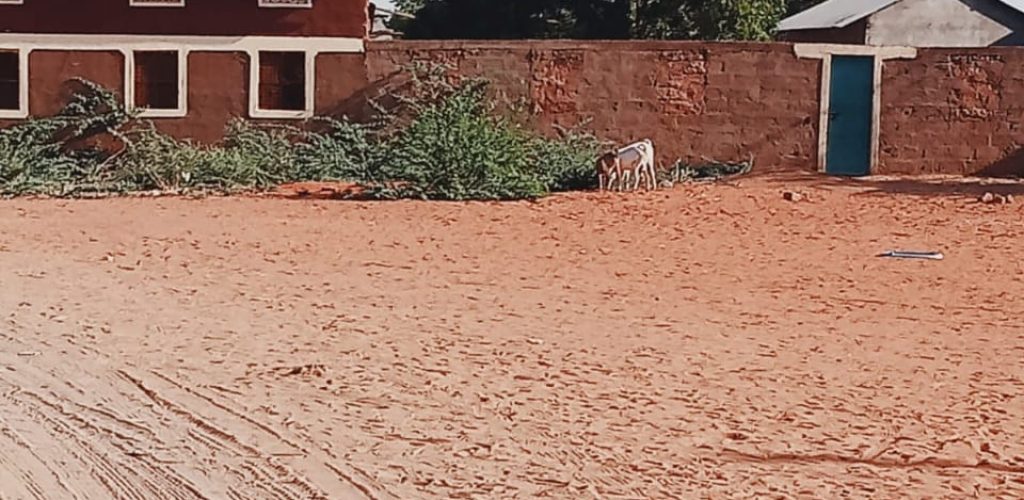
Almost immediately, my father made the decision to move us farther out, to the outskirts of the town. Away from the border. Away from where war, death, and destruction had become normal. But even then, insecurity was never truly far. It followed us quietly, shaping how we lived and how we thought.
I was young and academically gifted. I sat my final primary school exams during this period of uncertainty. Because of the constant danger, and because my father wanted to give me a better education and a safer future, I later moved to Nairobi. Yet Mandera, my hometown, never left me. During high school holidays, when I returned home, the insecurity had grown even more intense. I needed letters from the chief just to be allowed to travel back south so I could continue my education.
When there is no security, nothing functions. During election seasons, we relocated again and again—not for opportunity, but simply to stay alive.
It takes a certain kind of environment to raise a child. That environment stays with you. The wounds do not disappear; they remain, shaping how you see the world and how you respond to it.
I was loved. My parents did everything they could to protect me and my siblings. I remember relocating, changing schools, adapting, and studying alongside new faces. Despite everything, I loved my hometown deeply. It was where I spent my formative years—where I learned to read and write, where I first tried to understand the vast and complex world around me.
Living through war taught me something lasting. If war takes away certainty, then strength must be built deliberately. I made it my life’s mission to remain strong and to call others toward peace. Because peace is not abstract. It is children going to school without fear. It is families working without disruption. It is life functioning as it should.
I am 25 years old now, and I have lived both in war zones and in places with safety and security. The difference between the two is worlds apart. In one, life is reduced to survival. In the other, people are free to plan, to grow, and to live. Having known both, I understand this clearly: peace is not a luxury. It is the foundation of everything we hope to build.
[1] Mandera County sits at the tri-border junction of Kenya, Somalia, and Ethiopia, a strategic crossroads that has made it one of East Africa’s most conflict-affected regions.